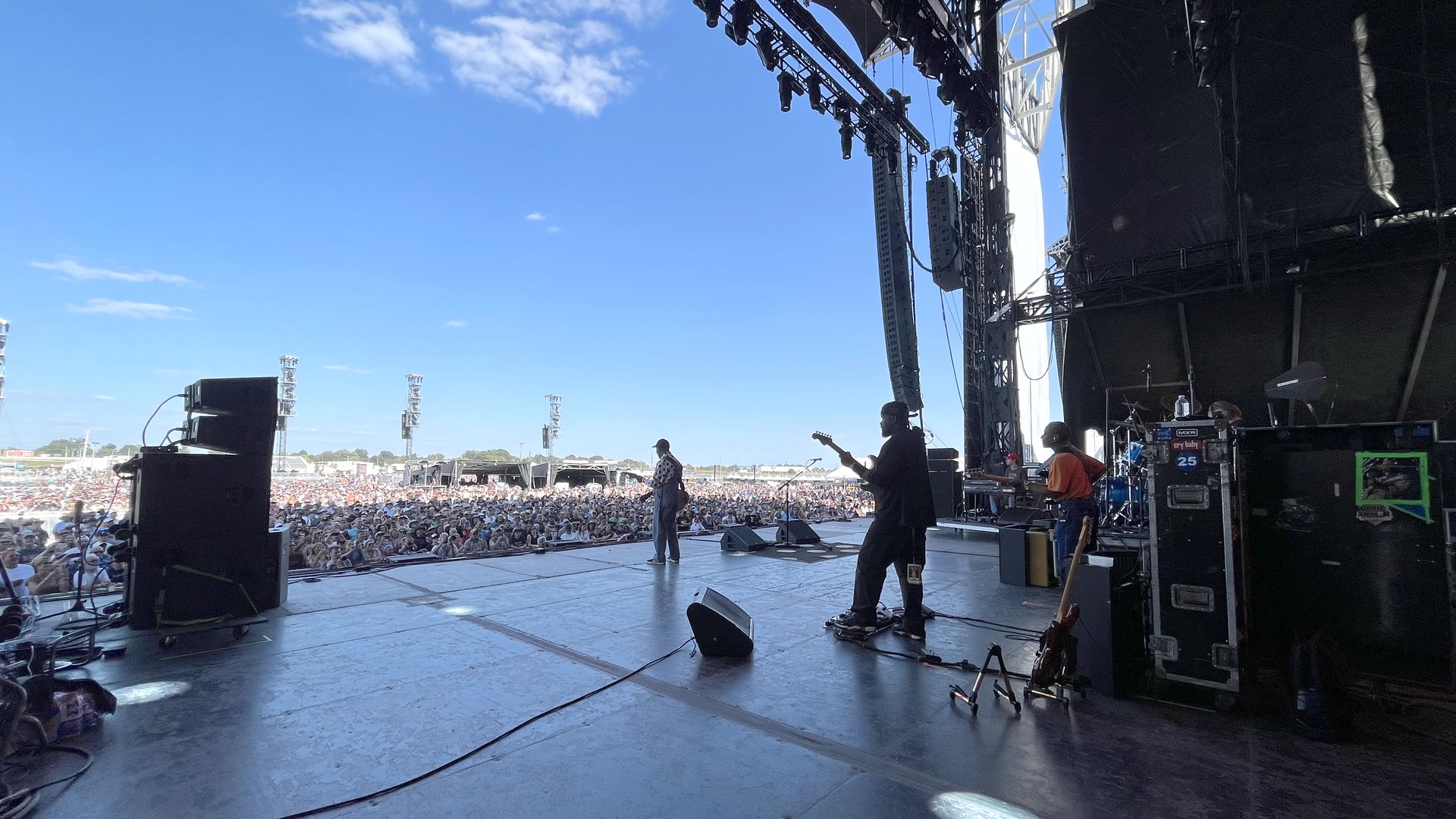
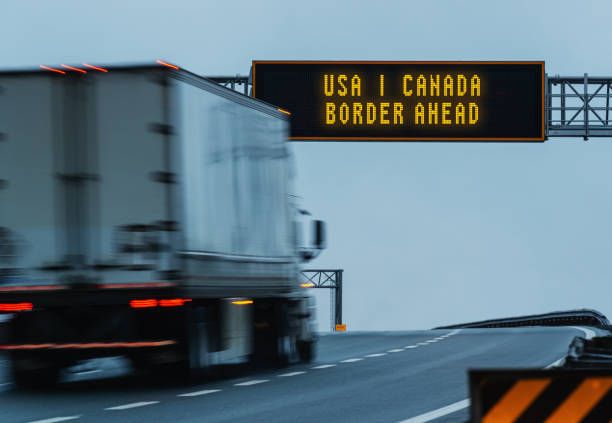
It is day twenty-nine. Four shows in four nights, and a border crossing you wish you could have slept through, except you spent the early morning hours running a stack of carnets and paperwork past the customs officers while everyone else kept their heads down in their bunks.
You wake up in a hotel room without being fully sure which city it is. Your body hurts in the specific way that a month on the road can do to a person. The phone dings. 6:33 in the morning. The usual suspect, texting to ask what time lobby call is, the same band member who has asked the same question every morning of the tour and has never once looked it up himself.
For a second your own mind goes blank too. On two and a half hours of sleep you can barely remember what day it is, much less whether there is catering tonight. You cannot remember if the venue has a front of house tech or if that is on you again. The drive after the show? Who knows.
So you text him back the only answer that matters.
Did you check Master Tour?
Thinking to yourself, maybe this is how we train them?
And the moment you type it, you feel your shoulders drop, because you are not the filing cabinet anymore. None of this has to live in your head. It lives in the app, where anyone can access it at any time, and so can you. It is all in there.
Notes:
Lobby 11:30.
Load in 12:30.
Catering 16:00, dietary notes attached.
Bus parking on site.
6 kilometers to the venue, 12 minutes.
House provides front of house. System tech is Marco.
210 kilometers to the next bed.
After show food note: great taco place around the corner on Waymark Avenue, open till 2 AM.
He finds all of it in ten seconds and stops texting you.
You did not have to remember any of this, and as it turns out, neither did anyone else. Because six weeks ago, hanging at your kitchen table with your coffee and your dog, you asked every one of those questions and wrote down every answer and populated them into Master Tour.
The exhausted version of you on day twenty-nine is living off the work the rested version did in advance. That is what advancing bought you, not a stack of confirmations. It buys back the mental energy when you have none left to spare.
Bottom line
Every show needs to be advanced in writing before you leave home. Confirmations, email trails, and documented agreements are not bureaucracy. They are the difference between a smooth load-in and standing at a venue with no PA, no catering, and a promoter who does not remember the conversation.
Here is the way to actually do it. Close your eyes and run the whole day before it happens. Start with the alarm. Where do you wake up, and how far is that bed from the stage you have to be standing on tonight? Fifty kilometers or five hundred? Are you driving it, flying it, or riding in local ground transportation? If you are flying, who and what picks you up on the other end, is there room in the back for the band's instruments, and does that vehicle actually exist or is it a random name somebody gave you on the phone? Play the day forward from there, minute by minute, all the way to the drive after load-out. Every question that surfaces while you run that tape is a question you should have answered weeks ago. Not the day before. Not from your hotel.
Why early is the whole game
Somebody usually saw it coming. They just saw it too late to fix.
Advance a fly date three weeks out and discover the backline company does not have the amp you need, and you have three weeks to find one that does. Discover the same thing when you land, and hopefully you can borrow gear from another band on the bill, but then your band is playing a major show on a rig they have never touched, and hope is not a backup plan. Reaching out to advance a few days before, a few hours before, is not advancing. It is just hastily announcing your disorganized arrival while simultaneously tarnishing your reputation. By then the venue or backline provider has whatever they have, and you get to live with it.
If you are responsible, kind, and you give people time, they can help solve things for you. Ask them at the last minute and they shrug, because you did not give them a reason to do anything else. The more notice the venue gets, the better the odds that a problem turns into a fix instead of a fire.
Run the day forward
The morning. How far is the drive, in kilometers or miles, and check with the bus driver to confirm what time zones and traffic will do to that number on the actual day of the week you are travelling. If you are flying, what time does the plane land, what is the plan if it does not land on time, and who is holding the ground transport? Are you going to the hotel first or the venue first, and is that the right call given your load-in? A band that routes to the hotel when they should have gone straight to the venue risks losing their soundcheck.

The neighborhood. When you get there, what is actually around you? Is there a coffee shop, a place to eat, somewhere the guitar player can buy strings and the drummer can grab sticks if he snaps one at soundcheck? Is there a hardware store within reach if something breaks? Some venues sit in the middle of a city and some sit in the middle of nowhere, and you want to know which one you are walking into before you are hungry with no restaurant and no time.
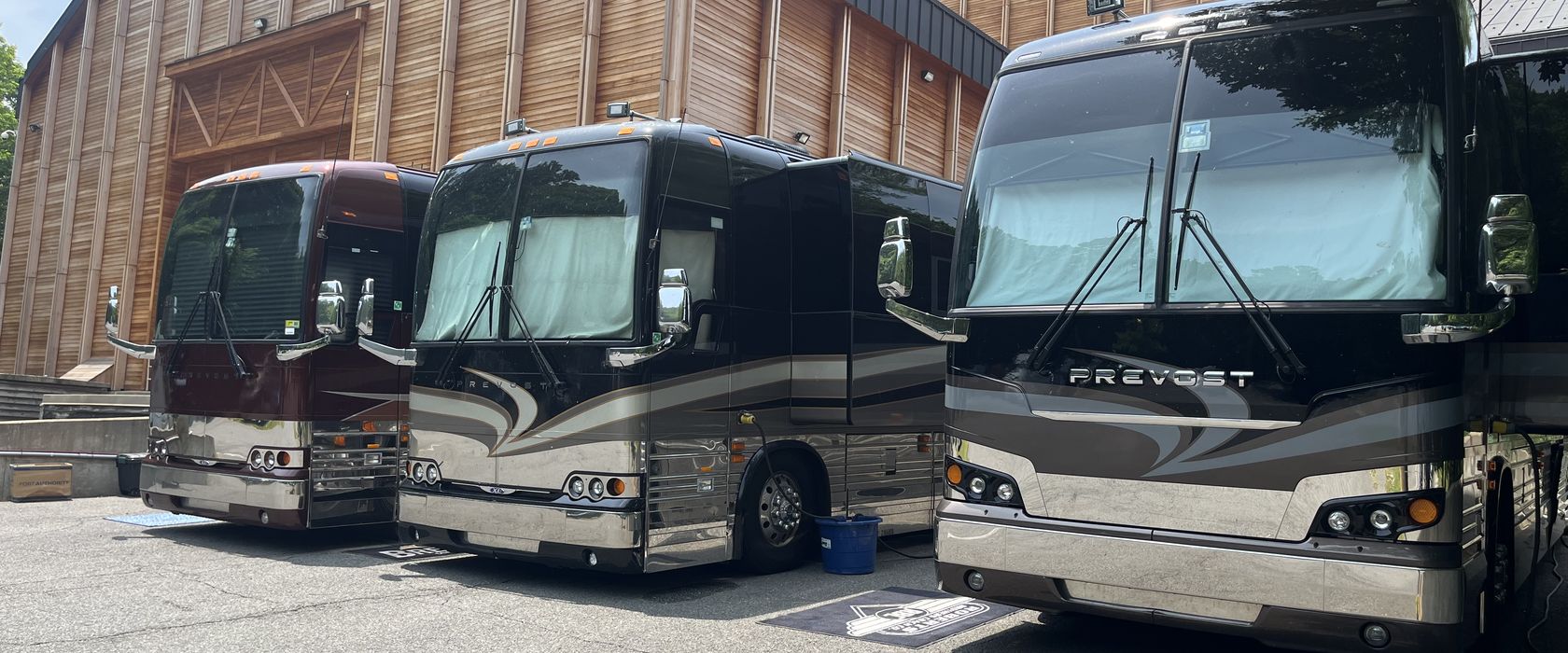
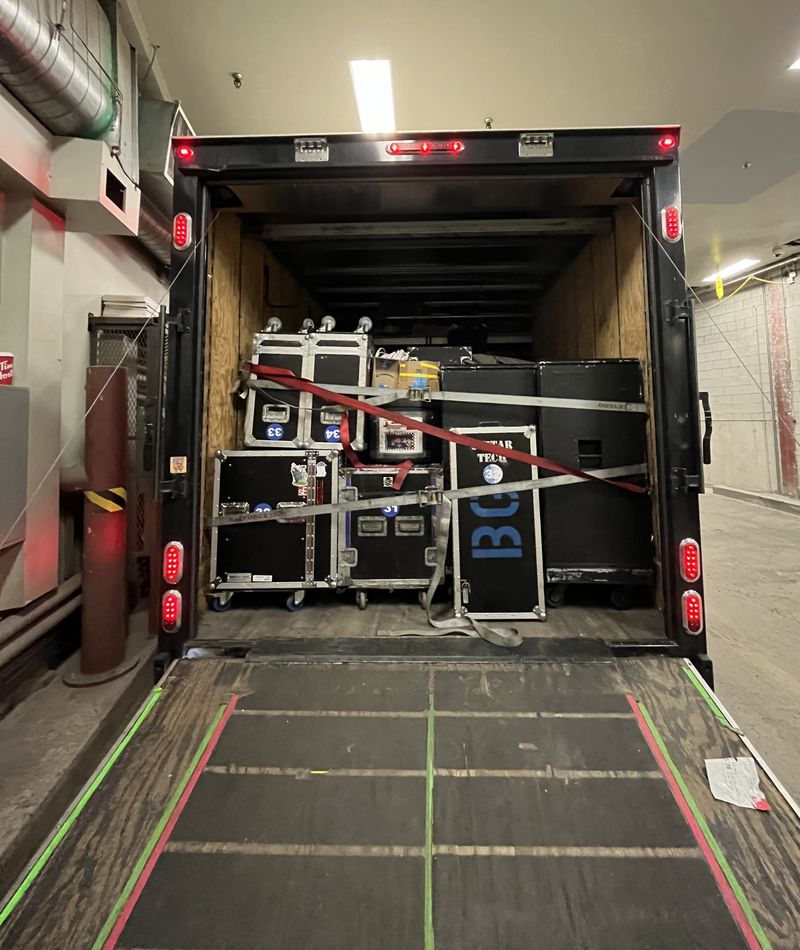
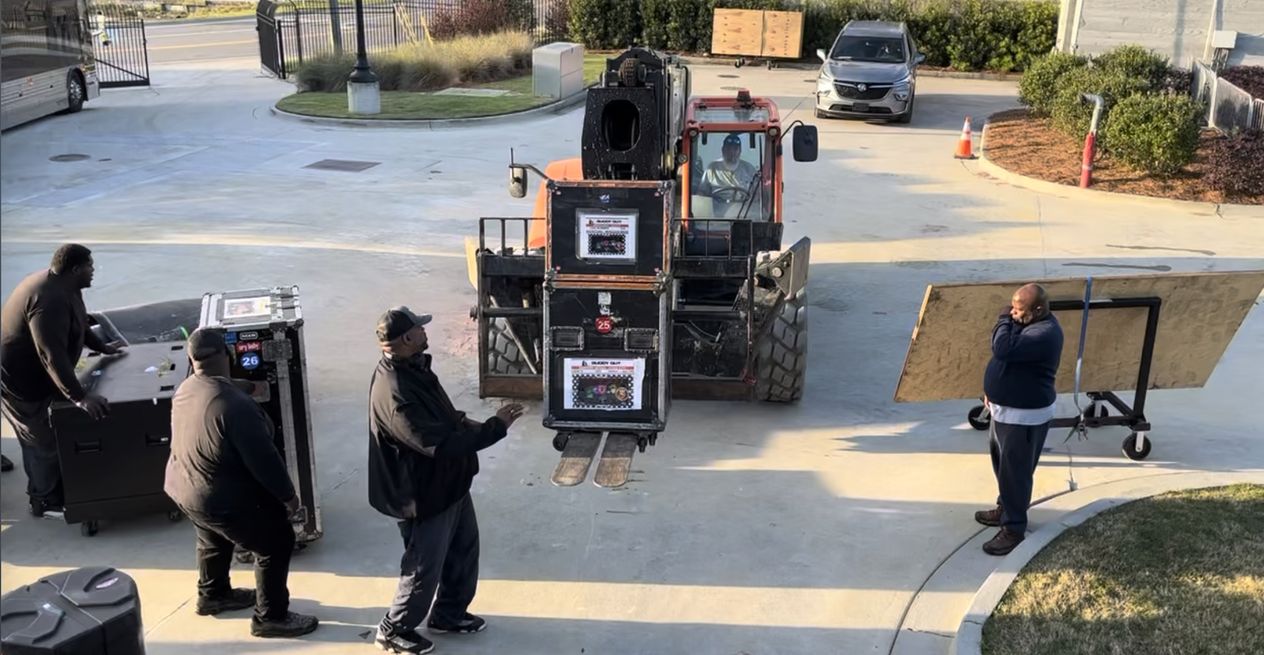
Getting in. Is there parking, and for what? A car is one thing. A van is another. A bus pulling a trailer with no legal place to sit is a liability that starts the second you arrive. Where is the load-in door, how far is it from the stage, and how many hands does the venue give you to get the gear from one to the other? Is there a loading dock or do you need a forklift, and if so, is there a sober qualified person to run it? Then ask the same question about the end of the night, because load-out crew is the thing everyone forgets to confirm and the thing you need most when you are exhausted and the curfew clock is running.
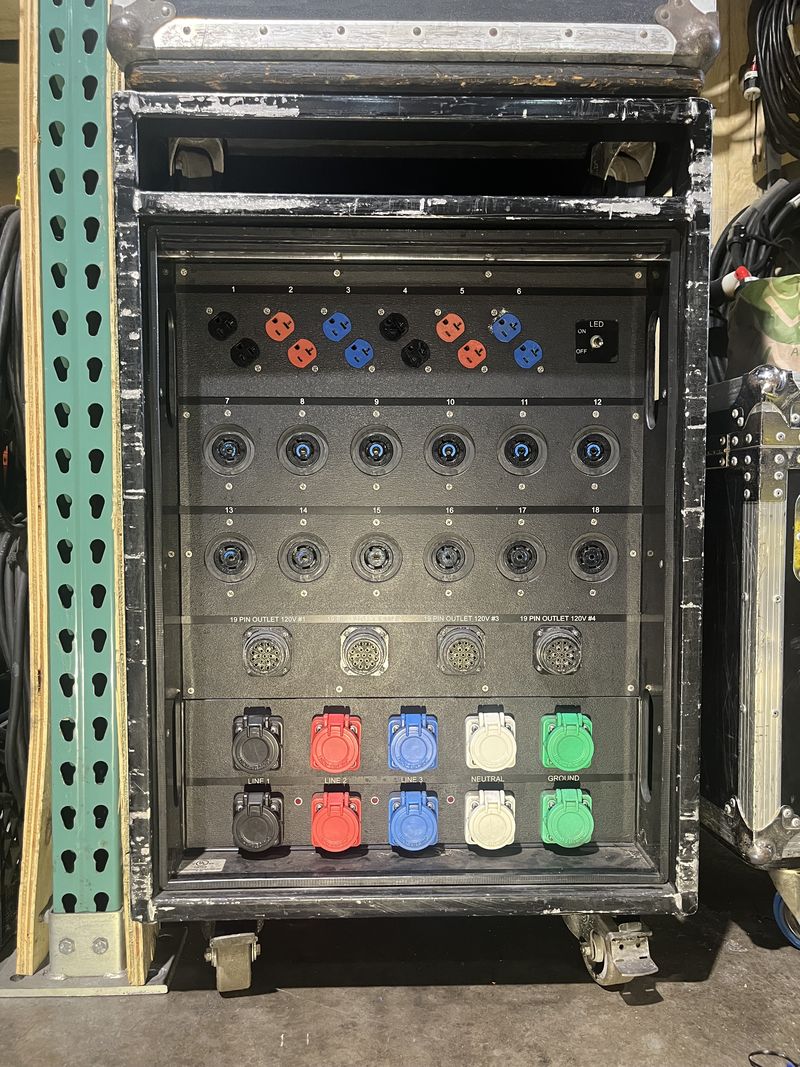
The room and the gear. How big is the stage and how many people fit in the room, because those two numbers tell you more about your night than almost anything else. Is there a rolling riser, or is changeover going to be a nightmare? Is there a PA, and whose is it, yours or theirs? Whose consoles are at front of house and monitors? Whose lighting desk? What does power distribution look like, how much is there, where is it, and does it match what your gear actually draws? Is there a front of house engineer, a monitor engineer, a system technician, a production manager, or are those four jobs actually one tired person doing all of them? Every one of those is a separate question and every one of them changes your day.
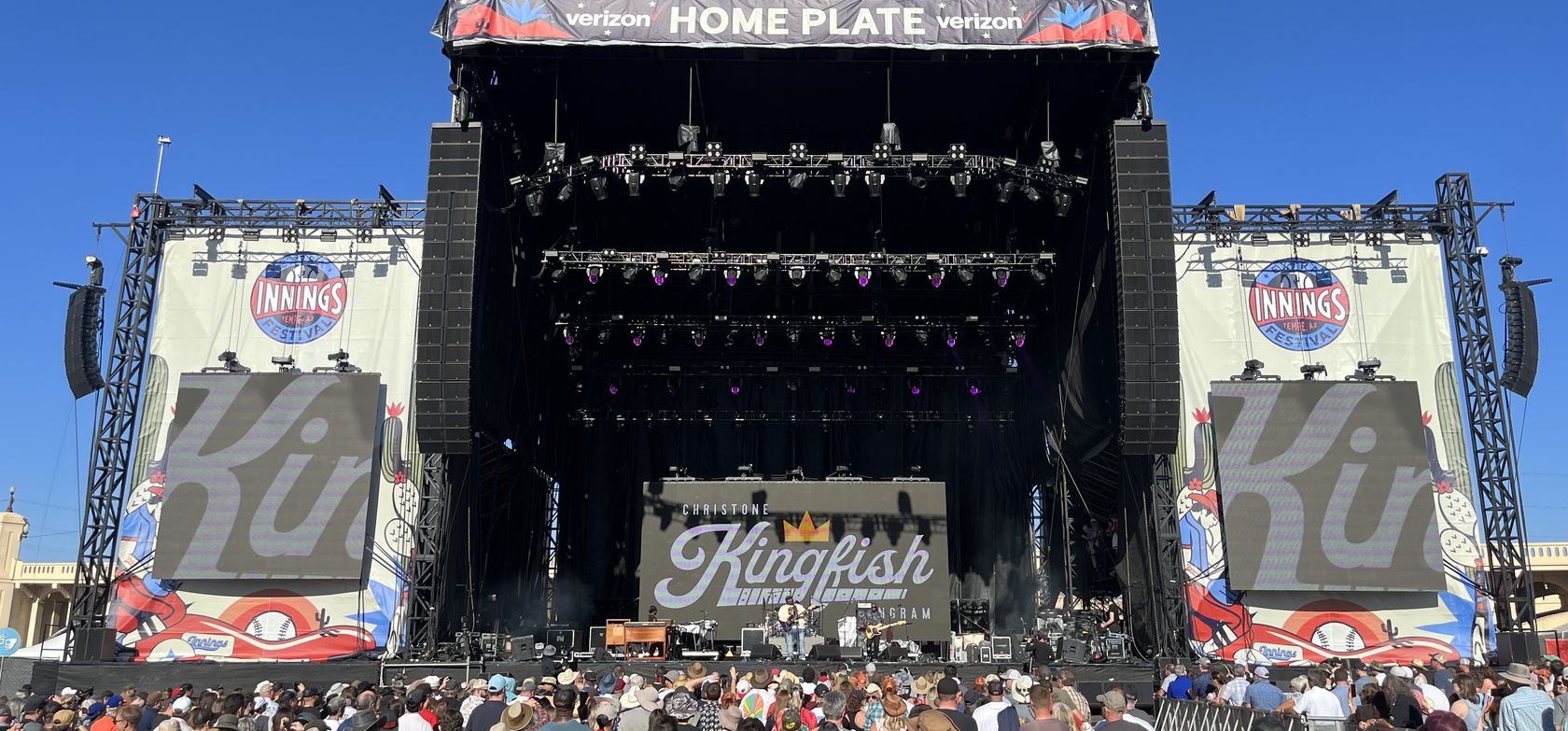
The show itself. Set times and load-in times, in writing, confirmed, because a band that thinks it is playing at night and finds out it was an afternoon slot has already missed the show and the money with it. Is there haze, and if there is, does the fire marshal need a note before you can use it? Is there a backdrop, can you actually hang it, and does it need a fire certification somebody has to review first? What is the photo and video policy? What are the security procedures, and when is the security meeting? What happens if the band runs long? Is there a curfew, what does breaking it cost, and who pays?
The money. Settlement, door splits, merchandise rate, and who is standing at the merch table taking a cut while you are on stage. Get the number agreed in an email, because a rate that was never agreed gets decided by whoever is holding the clipboard at the moment you cannot argue.
The end of the night. How long does load-out take, how many hands do you have for it, and how far is the drive after the show to wherever you sleep? The day does not end when the last song does. It ends when the gear is in the truck, the band is on the bus, and the wheels are rolling.
Depending on where you sit, it changes shape
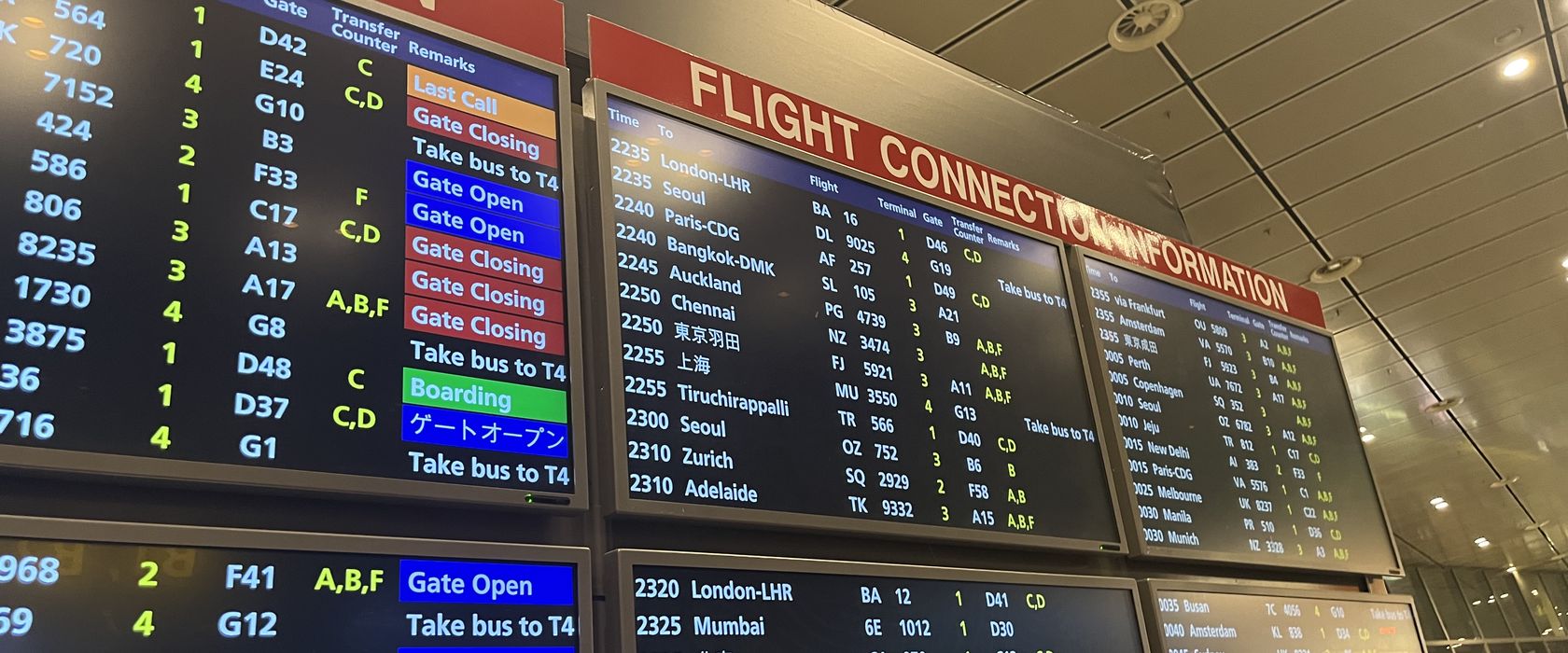
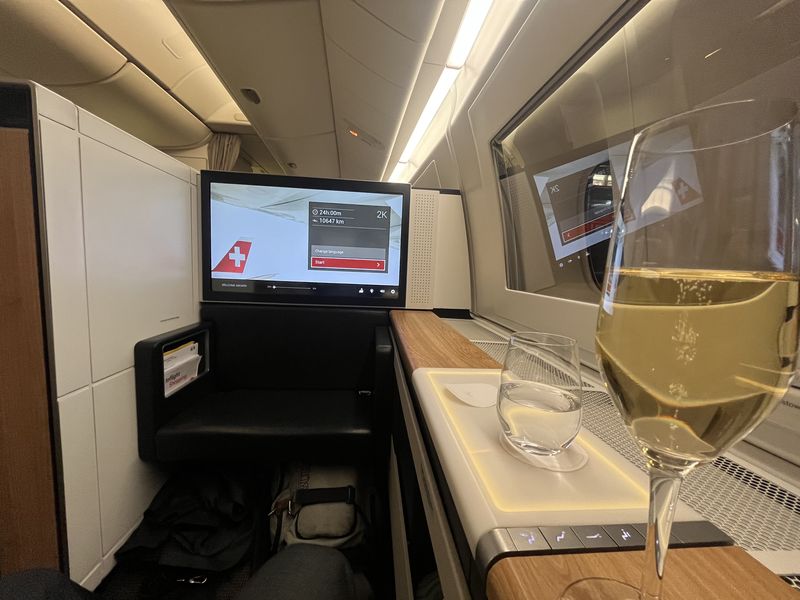
The list is the same. The stakes are not. On a bus tour you carry your own answers to half of it, so the advance is about the venue meeting you where you already are. On a fly date you carry almost nothing, you land the day of the show, and you have probably never met the backline company, so the advance call is the only shot you get at catching a problem before it is on stage. Before anyone gets to the airport, make sure you are holding everyone's flight confirmations and that baggage is prepaid, so nobody is stuck at the counter sorting out a bag fee while the group is trying to move. And if you are picking up a rental car on the other end, know what that actually looks like. Is there a line at the counter, how long does it run, and do you have enough time to wait through it and still make your load-in? Did you send your hotel rider and call ahead to make sure the room keys are ready when you arrive, or is the band going to sit in the lobby for two hours while random fans are bugging them? Walk that day especially hard, and advance a spare guitar while you are at it, because an airline losing or breaking one should not mean an artist standing there with nothing to play.
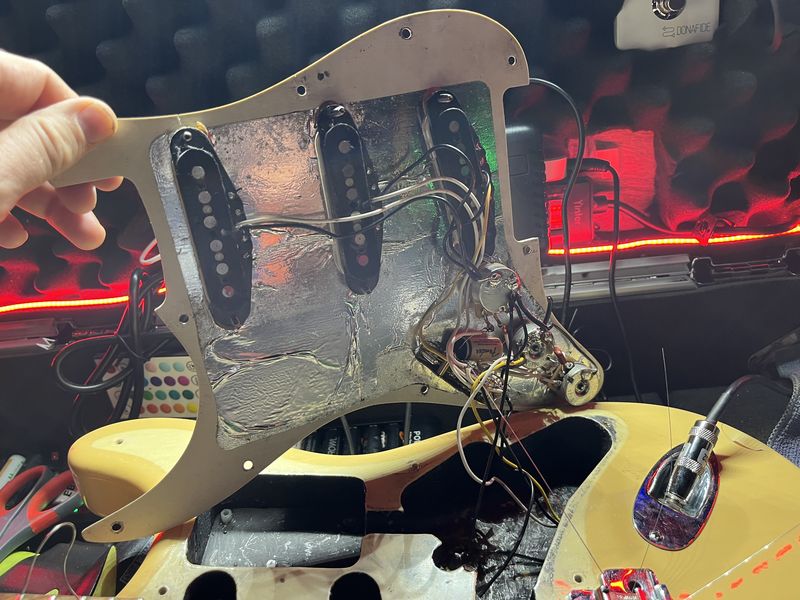
And if you are the opening act riding along with a headliner, the whole exercise flips. Now the question is not only what do you need. It is do you have everything you need so that you are not in their way. Nobody remembers the opener who nailed it. Everybody remembers the opener who blew the changeover and made the headliner start late. Bring your own solutions and stay out of the other band's way.
The point
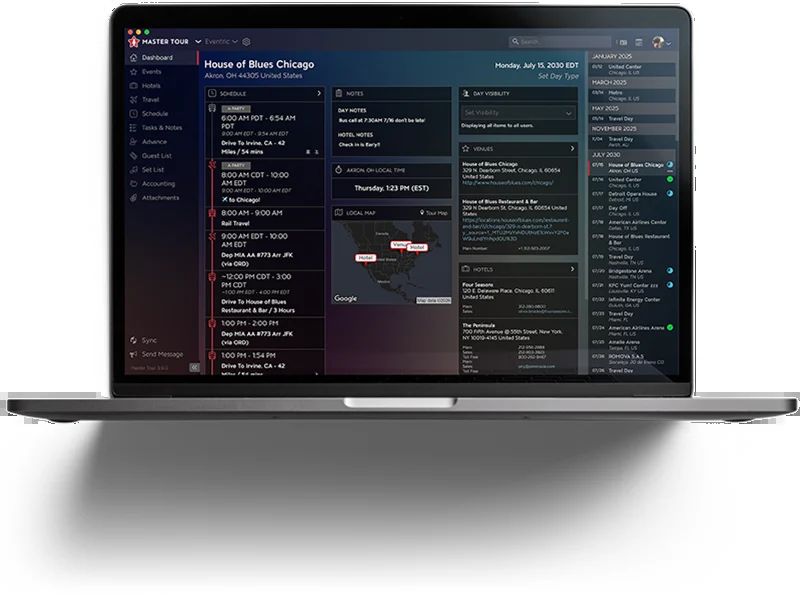
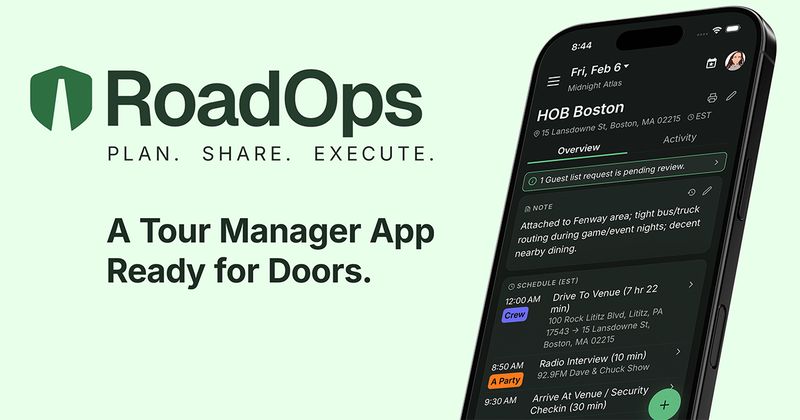
Put all of it in one place. Master Tour, RoadOps, Daysheets, whatever your party already uses. One centralized document, built once and reused every date, so nobody is guessing when bus call is, where the hotel is, whether there is catering, whether there is backline. Set permissions where you need them, so certain numbers stay locked to certain people. But the data lives in one location that the whole band and crew can reach.
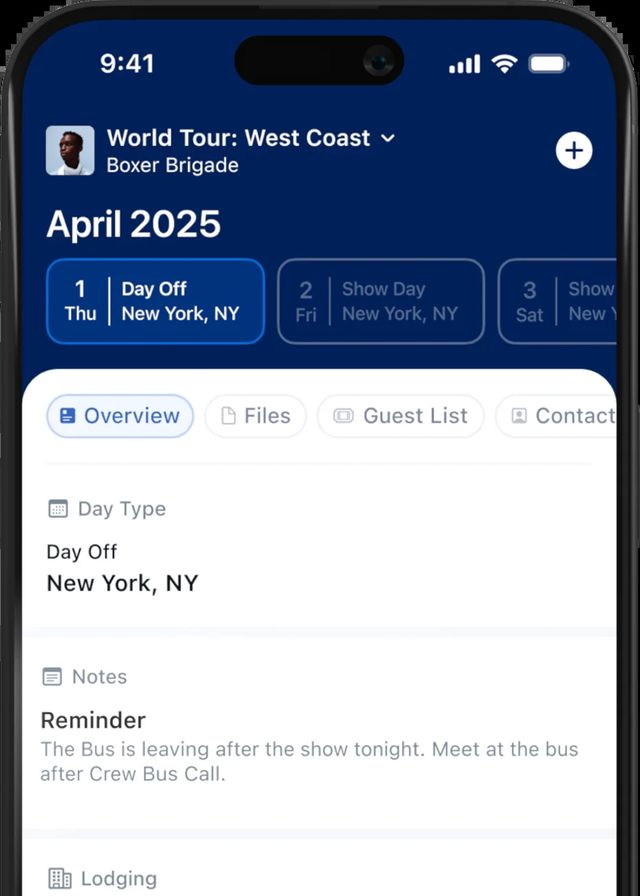
What does that feel like when it works? Halfway through the day, when you need the runner, you cannot remember the number to save your life. The old version of this was you searching through emails, opening the wrong venue thread from last year, or asking if someone in the band still has that text. The new version is you open the app, and it is right there under contacts, because you put it there when you advanced the show. Thirty seconds instead of twenty minutes, on a day you do not have twenty minutes.
Run the tape before you leave home. Wake up, and drive to the venue in your head, load in, soundcheck, play, settle, load out, and drive to the next bed, all of it, before any of it is real. Every gap you find requires an email, and if needed, a follow up phone call. Make those calls weeks out, when the venue can still say yes to fixing them.

Because day twenty-nine is coming. You will be too tired to think. The best version of you who can save the show is the one sitting at the kitchen table weeks earlier, coffee going cold, asking every question. Because at least then there is still time to find the answers.
-SA